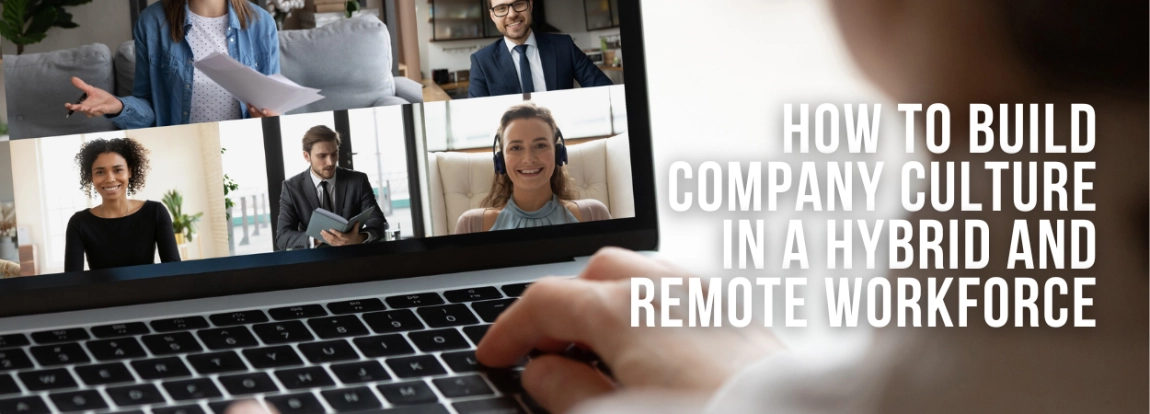
A Deep Dive into Virtual Culture: Remote Doesn't Mean Disconnected
 Written By Rachael Bean, Marketing Co-ordinator
A new employee joins your company remotely.
Their first day consists of login credentials, calendar invites, company policies and a series of video calls.
By lunchtime, they've technically met the team.
But emotionally?
They probably haven't.
As hybrid and remote working have become a permanent part of modern business, organisations have gained flexibility, access to wider talent pools and improved work-life balance for employees. Yet many business leaders are facing a new challenge: maintaining company culture when teams rarely share the same physical space.
Projects are delivered. Meetings happen. Targets are achieved.
But something feels different.
The sense of belonging, connection and shared identity that once developed naturally in an office environment can become harder to create and sustain.
The problem isn't remote working itself.
The problem is assuming that digital communication alone can carry the weight of company culture.
.png)
The Growing Challenge of Employee Disconnection
Recent research highlights a growing concern for organisations operating with remote and hybrid teams. According to Gallup, only 28% of fully remote employees strongly agree that they feel connected to their organisation's mission and purpose - the lowest level recorded for remote workers since before the pandemic.
This statistic raises an important question: How do organisations create genuine connection when employees no longer share a physical workplace? The answer lies in understanding how humans build relationships, trust and emotional attachment.
Why Screens Aren't Enough to Build Workplace Connection
Technology has transformed how we communicate and collaborate. Teams can work seamlessly across locations, countries and time zones. However, human connection extends beyond what can be achieved through screens alone.
We experience the world through multiple senses. Touch, physical presence and environmental cues all play a role in how we form memories, relationships and emotional attachments. Researchers studying hybrid and remote work environments have found that employees can become psychologically distant from their organisations when physical workplace cues disappear. Without intentional efforts to maintain connection, company culture can gradually become something employees hear about rather than actively experience. Two important concepts help explain why this happens.
Psychological Ownership: Turning Employees Into Advocates
Psychological ownership occurs when employees shift from saying: "I work for this company." to "This feels like my company." When employees feel a sense of ownership, they become more engaged, invested and committed to organisational success. They are more likely to advocate for the business, contribute ideas and develop stronger loyalty over time. Traditionally, workplaces naturally supported psychological ownership through shared environments, team rituals and everyday interactions. In remote settings, these connections need to be created more intentionally.
Haptic Perception: Why Physical Touchpoints Matter
Haptic perception refers to our sense of touch. Behavioural science consistently demonstrates that people place greater value on things they can physically interact with than things they only experience digitally. Tangible objects create physical reminders of identity, belonging and shared purpose. In a digital-first world, they become powerful anchors that reinforce organisational culture.
.png)
The Hybrid Work Paradox
Let's be clear.
Hybrid and remote working offer significant benefits:
- Reduced commuting time
- Improved work-life balance
- Greater autonomy and flexibility
- Access to wider talent pools
- Enhanced productivity for many roles
The challenge emerges when independence gradually becomes isolation.
Many organisations attempt to solve this issue by increasing digital communication:
- More meetings
- More channels
- More emails
- More notifications
Unfortunately, this often creates screen fatigue rather than stronger relationships.
The strongest company cultures aren't built by recreating the office online. They're built by intentionally designing meaningful experiences that help employees feel connected to something larger than themselves.
.png)
Three Practical Ways to Strengthen Remote Company Culture
Building a connected workforce doesn't require extravagant budgets or complicated programmes.
It requires thoughtful, intentional actions.
1. Create a Memorable Day One Experience
First impressions matter. Instead of making login credentials the first interaction with your organisation, consider creating a welcome experience before an employee's first day.
A thoughtfully curated onboarding package might include:
- Premium branded clothing
- A quality notebook or journal
- A personal welcome message from leadership
- Practical items employees will genuinely use
The objective isn't simply gifting merchandise. It's creating an emotional connection from day one.
2. Invest in the Employee Workspace Experience
Remote employees spend thousands of hours each year in their workspace. Small improvements can have a significant impact on both productivity and engagement.
Consider practical additions such as:
- Premium desk accessories
- Ergonomic workspace products
- High-quality drinkware
- Everyday technology accessories
- Sustainable office essentials
These products become daily touchpoints that reinforce support, appreciation and belonging.
3. Celebrate Milestones Beyond Digital Notifications
Work anniversaries, promotions and major achievements deserve more than an automated message.
- A handwritten note.
- A personalised gift.
- A thoughtfully selected keepsake.
These tangible gestures communicate appreciation in a way that digital notifications rarely can. Years later, employees may not remember a congratulatory message in Slack.
They often remember how a company made them feel.
.png)
The 4-Question Company Culture Audit
If you're responsible for employee engagement, employer branding or workplace culture, consider these four questions.
1. Visibility
Is your brand visible in your employees' workspace, or hidden in a drawer?
Without physical reminders, organisations can quickly become "out of sight, out of mind." Useful, well-designed products create regular moments of brand engagement throughout the working day.
2. Quality
Would employees choose to wear or use your branded products if they weren't required to?
Quality communicates value. Premium products signal that your organisation cares about details and employee experience. Cheap, disposable items often communicate the opposite.
3. Emotion
How many of the five senses does your employee experience actively engage?
Most virtual communication relies exclusively on sight and sound. Yet some of our strongest memories are tied to physical experiences. The feel of a quality notebook, the comfort of premium apparel, the experience of receiving a thoughtfully packaged gift. These moments create emotional connections that digital communication struggles to replicate.
4. Sustainability
Would employees keep the item for years, or discard it within months?
Modern employees increasingly evaluate organisations based on their environmental and social responsibility. Useful, durable and sustainably sourced products reinforce positive perceptions of your brand. Disposable giveaway items often undermine them.
Why Branded Merchandise Plays a Bigger Role Than Many Realise
Promotional merchandise is often viewed solely as a marketing tool. However, in hybrid and remote working environments, it can serve a much broader purpose.
When thoughtfully selected, branded merchandise helps organisations:
- Reinforce company culture
- Strengthen employee engagement
- Support onboarding programmes
- Create memorable employee experiences
- Increase brand visibility
- Foster a stronger sense of belonging
The key is moving beyond low-value giveaways and focusing on products employees genuinely want to use. Quality, functionality and relevance matter.
The Future of Work Is Intentionally Connected
The future of work isn't fully remote. And it isn't fully office-based. It's intentionally connected.
The organisations that thrive won't necessarily be the ones sending the most merchandise or hosting the most virtual meetings.They'll be the ones creating meaningful experiences that reinforce connection, identity and belonging. In an increasingly digital world, physical touchpoints help bridge the gap between communication and connection.When done thoughtfully, they become more than branded products. They become reminders of belonging.
And belonging remains one of the most powerful drivers of employee engagement, loyalty and advocacy any organisation can create.
Further Reading & References
- Administrative Sciences Journal (2026 Work Study): Cieslak & Valor. Psychological Ownership and Resistance to Change in Hybrid Environments. Exploring how the lack of physical embeddedness increases psychological distance in remote teams.
- International Journal of Organization Theory & Behavior (2025): Krauss & Wienrich. Shades of remote work isolation and the power of psychological ownership. Investigating how target-driven possessive feelings mitigate hybrid isolation.
- Harter, J. (2023) Are Remote Workers and Their Organizations Drifting Apart? Available at: https://www.gallup.com/workplace/509759/remote-workers-organizations-drifting-apart.aspx